


Description
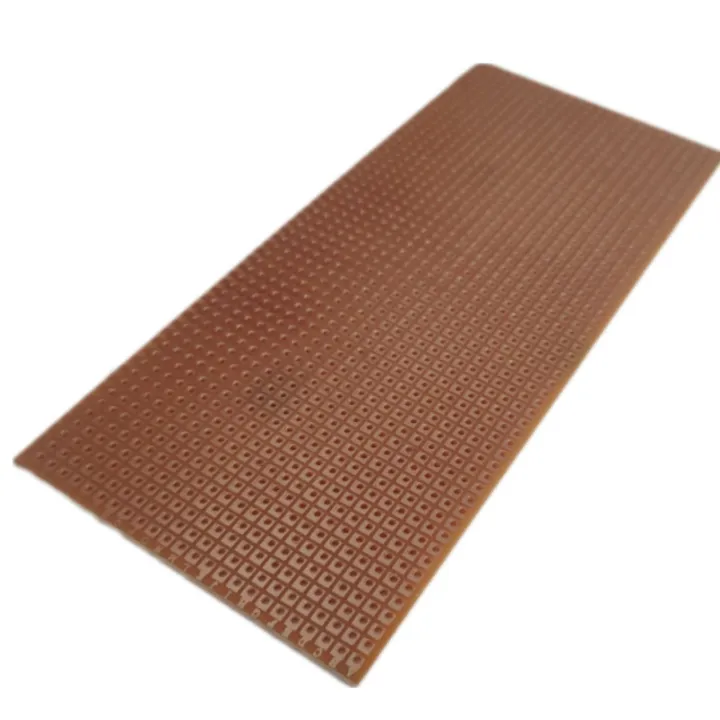
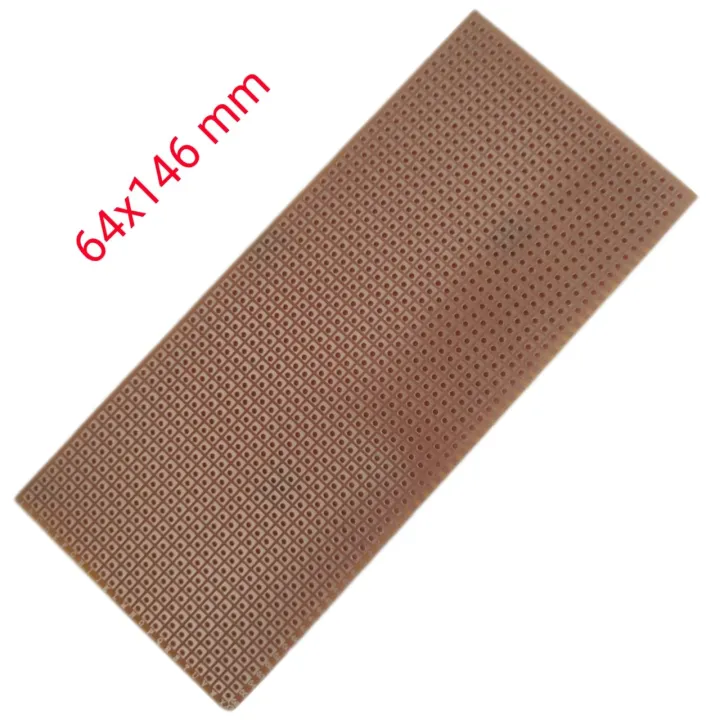
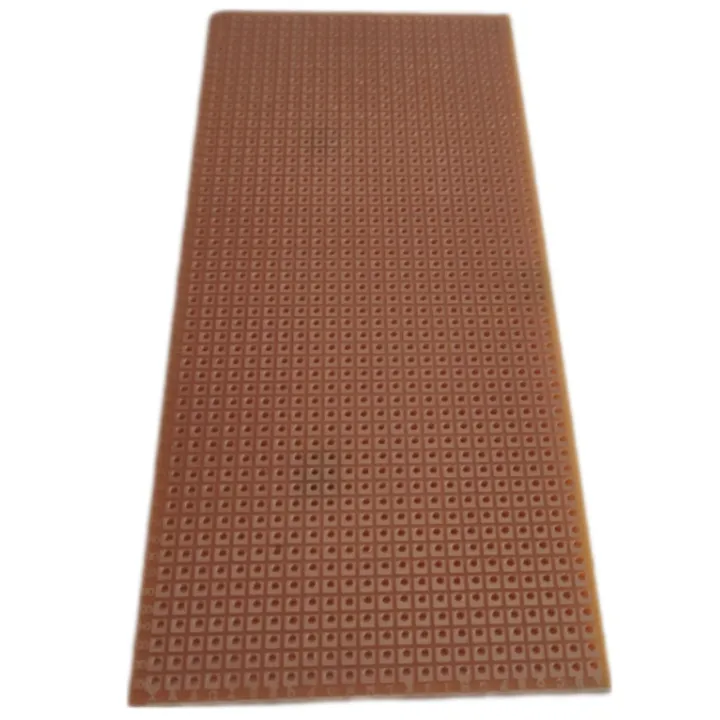
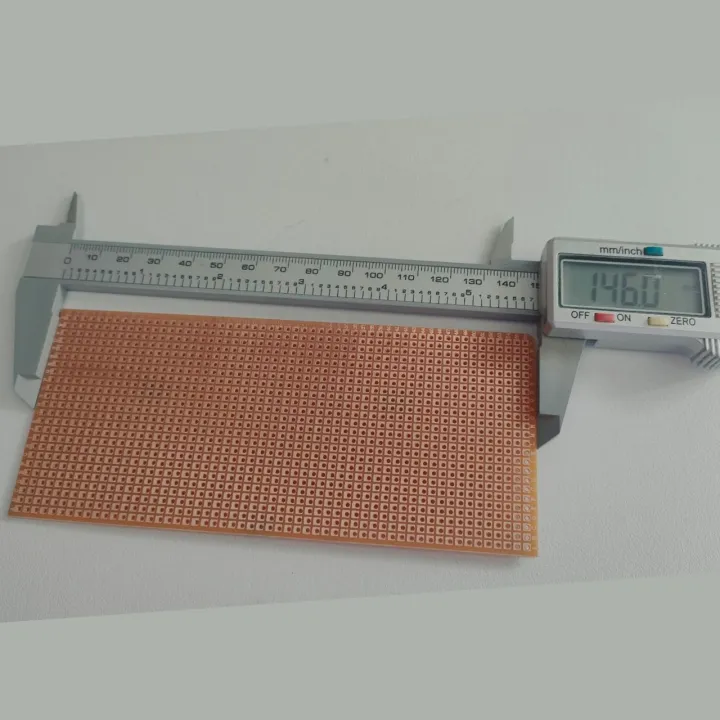
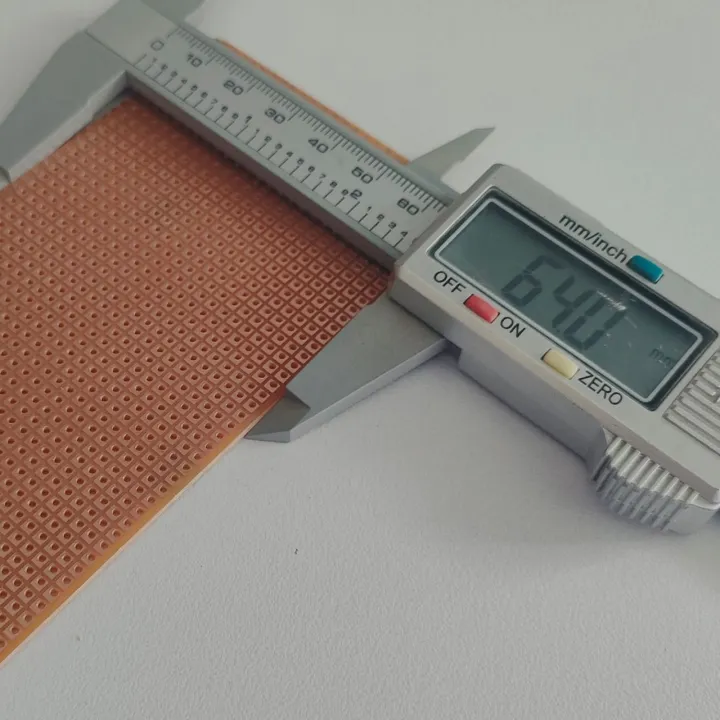
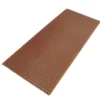
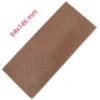
Testing a circuit on a solderless breadboard often leaves loose jumper wires, stray capacitance, and unreliable contacts that fall apart the moment you move a project or demonstrate a science model. The Veroboard Project Board – 64x146mm Single-Sided Stripboard for DIY & Science stocked at Rafiq Electronics gives you a firm, permanent copper-strip layout measuring 64 × 146 mm (approx. 2.52 × 5.75 inches) for turning breadboard prototypes into sturdy working boards. Unlike perforated dot-matrix boards where you have to bridge every pad manually with solder or wire jumpers, this single-sided stripboard features continuous parallel copper tracks along one side so you can group component legs cleanly and cut tracks only where isolation is required. To see how stripboards and breadboards differ when moving from rough circuit layout to soldered hardware, read about Stripboard on Wikipedia.
Measuring 64 × 146 mm, this Veroboard Project Board offers generous rectangular working space for microcontrollers, sensor modules, power-rail buses, transistor stages, and school or college science exhibition circuits without wasting a huge sheet. Each through-hole pad aligns with standard 2.54mm (0.1-inch) pin spacing used by DIP ICs, pin headers, axial resistors, capacitors, and screw terminals, while the single-sided copper backing keeps assembly straightforward for hobbyists and students.
Electronics makers, students building science fair models, repair tinkerers, and DIY circuit builders rely on this Veroboard Project Board whenever a soldered prototype needs more durability than a plug-in breadboard.
Whether you are assembling a sensor control circuit, wiring a neat power/signal bus, or mounting a permanent science project model, this 64 × 146 mm Single-Sided Stripboard provides a practical, well-proportioned base.
Veroboard Project Board Layout & Prototyping Strengths
-
Generous 64 × 146 mm Rectangular Footprint: Provides ample space for multi-stage circuits, power rails, and external wire connections while fitting cleanly inside medium project enclosures.
-
Single-Sided Continuous Copper Strips: Parallel copper runs simplify bus wiring and component leg connections, reducing jumper clutter on straightforward builds.
-
Standard 2.54mm (0.1″) Pitch Hole Grid: Compatible with standard through-hole components, IC sockets, headers, and discrete parts.
-
Ideal for DIY & Science Projects: Easy for students, makers, and technicians to populate, solder, and troubleshoot step by step.
-
Clean Alternative to Loose Breadboards: Holds soldered joints firmly against movement, vibration, and classroom or bench handling.
Technical Specifications
| Parameter | Details |
| Product Name | Veroboard Project Board – 64x146mm Single-Sided Stripboard |
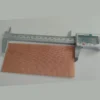
| Board Dimensions | 64 × 146 mm (Approx. 2.52 × 5.75 Inches) |
| Board Type | Single-Sided Stripboard / Prototyping Board |
| Hole Pitch | Standard 2.54mm (0.1 Inch) Grid |
| Copper Side | Single-Sided Parallel Copper Strips |
| Primary Applications | DIY Electronics, Science Projects, Circuit Prototyping & Bench Builds |
Practical DIY, Prototyping & Science Project Uses
-
Control, Sensor & Indicator Circuits: Build neat soldered circuits combining components such as our 1K Ohm Resistor, 10K Ohm Resistor, 50V 1uF Electrolytic Capacitor, and 5mm Transparent LED Mix Color Pack of 10 Pcs.
-
Power & Regulator Sub-Assemblies: Mount compact regulation or switching stages alongside modules like our LM2596 Buck Converter or DC Motor Speed Controller 12V 1.5A on a single organized board.
-
School & College Science Models: Create sturdy, presentable soldered circuits for physics/electronics demonstrations where loose breadboard jumpers could pop out during transport.
-
Soldering, Track Cutting & Testing Tools: Solder cleanly using our Original 60W Soldering Iron Kit with Solder Paste & 0.8mm Wire and Broza Soldering Flux Paste, trim leads flush with YTH-109 Electronics Wire Cutter Pliers, and check strip continuity/isolation with the DT830 Digital Multimeter.
Stripboard Soldering & Track Isolation Tips
Always check continuity between adjacent copper strips with a multimeter after cutting a track or soldering nearby pads so tiny solder bridges do not short power to ground. Avoid holding the soldering iron on a single pad too long so the copper strip stays firmly bonded to the board base, and keep high-voltage mains AC away from narrow strip spacing unless the board is specifically rated and spaced for mains isolation.


Reviews
There are no reviews yet.